
Creating a found pet poster: what to put on it
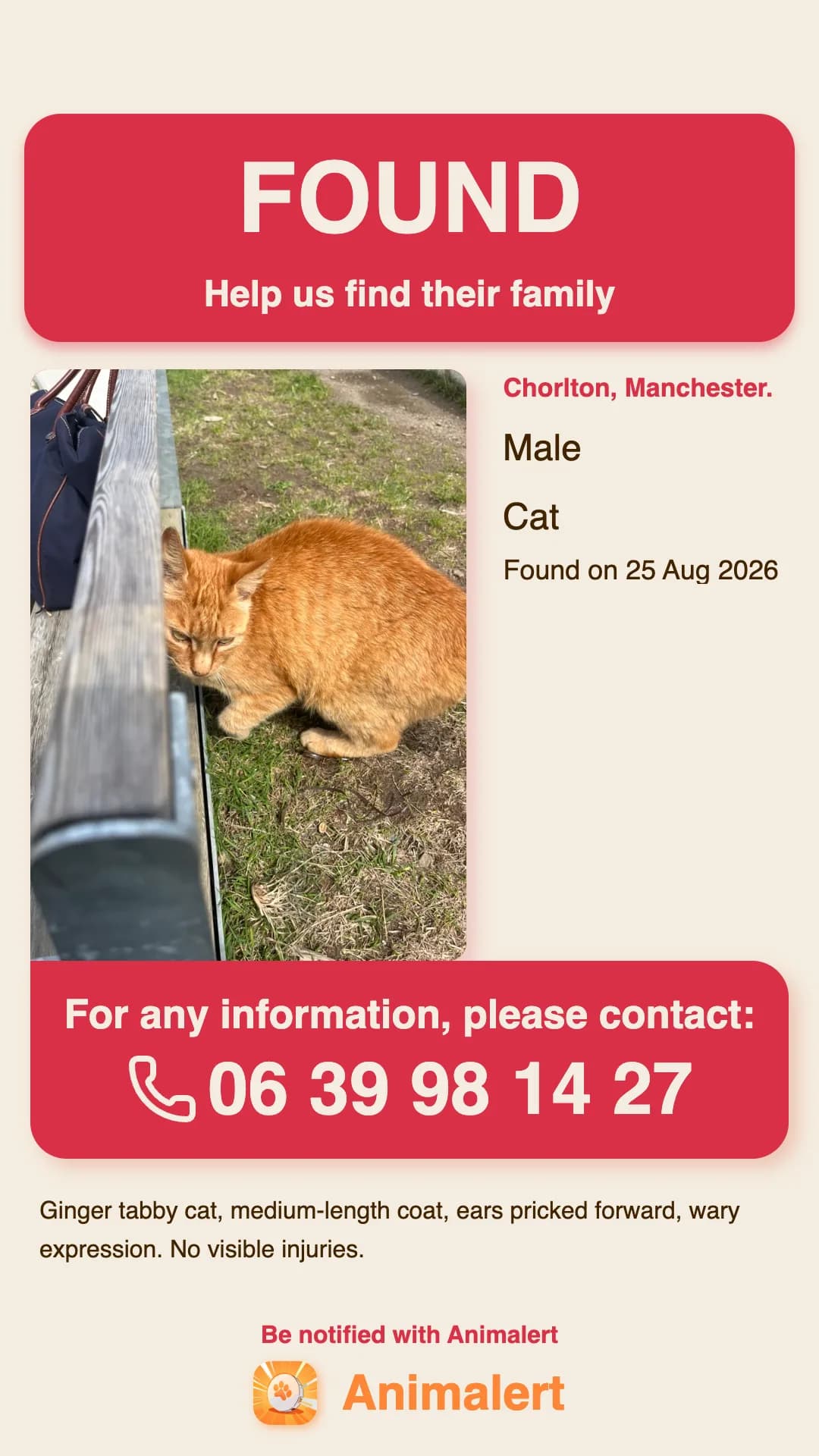
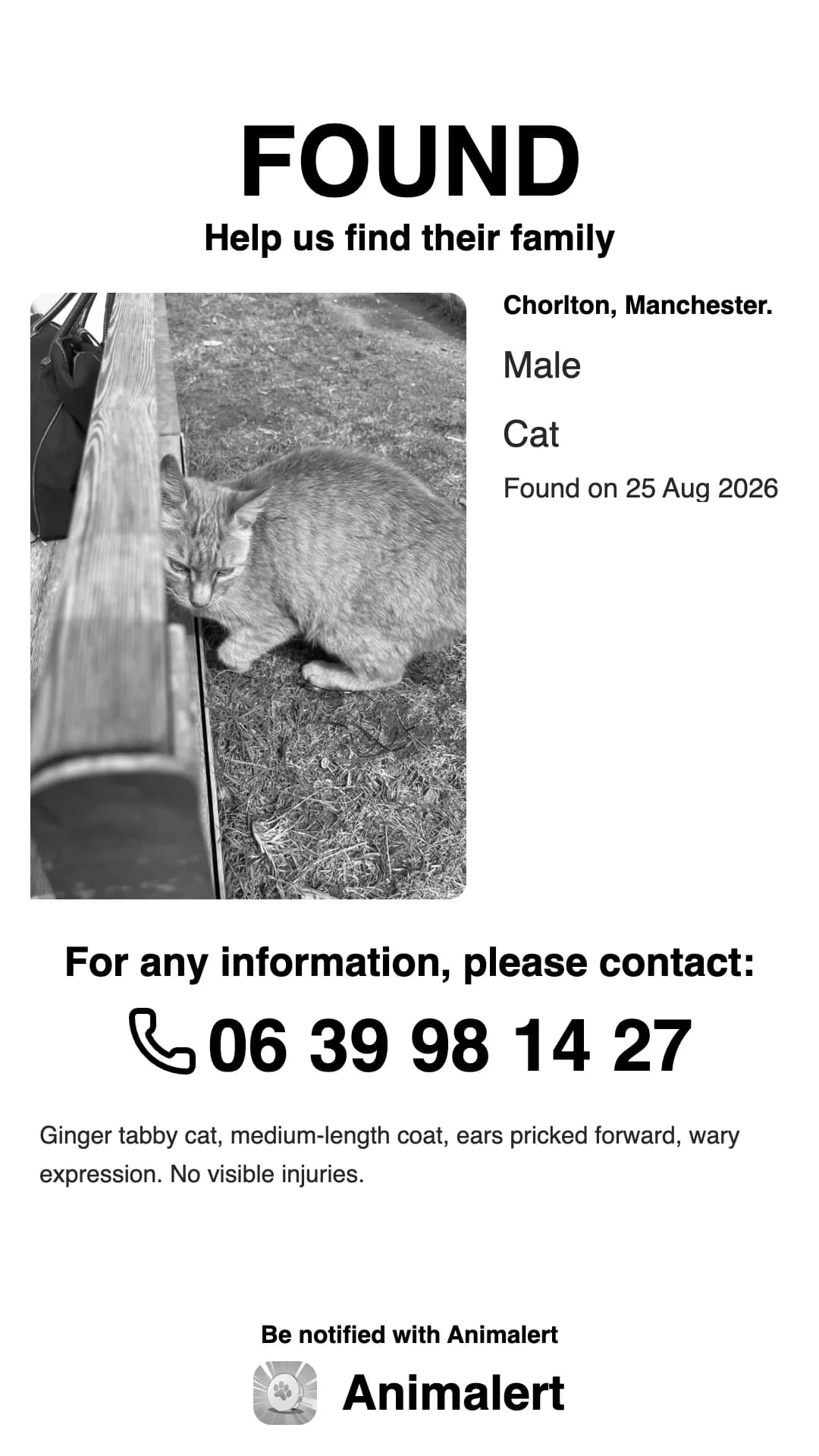
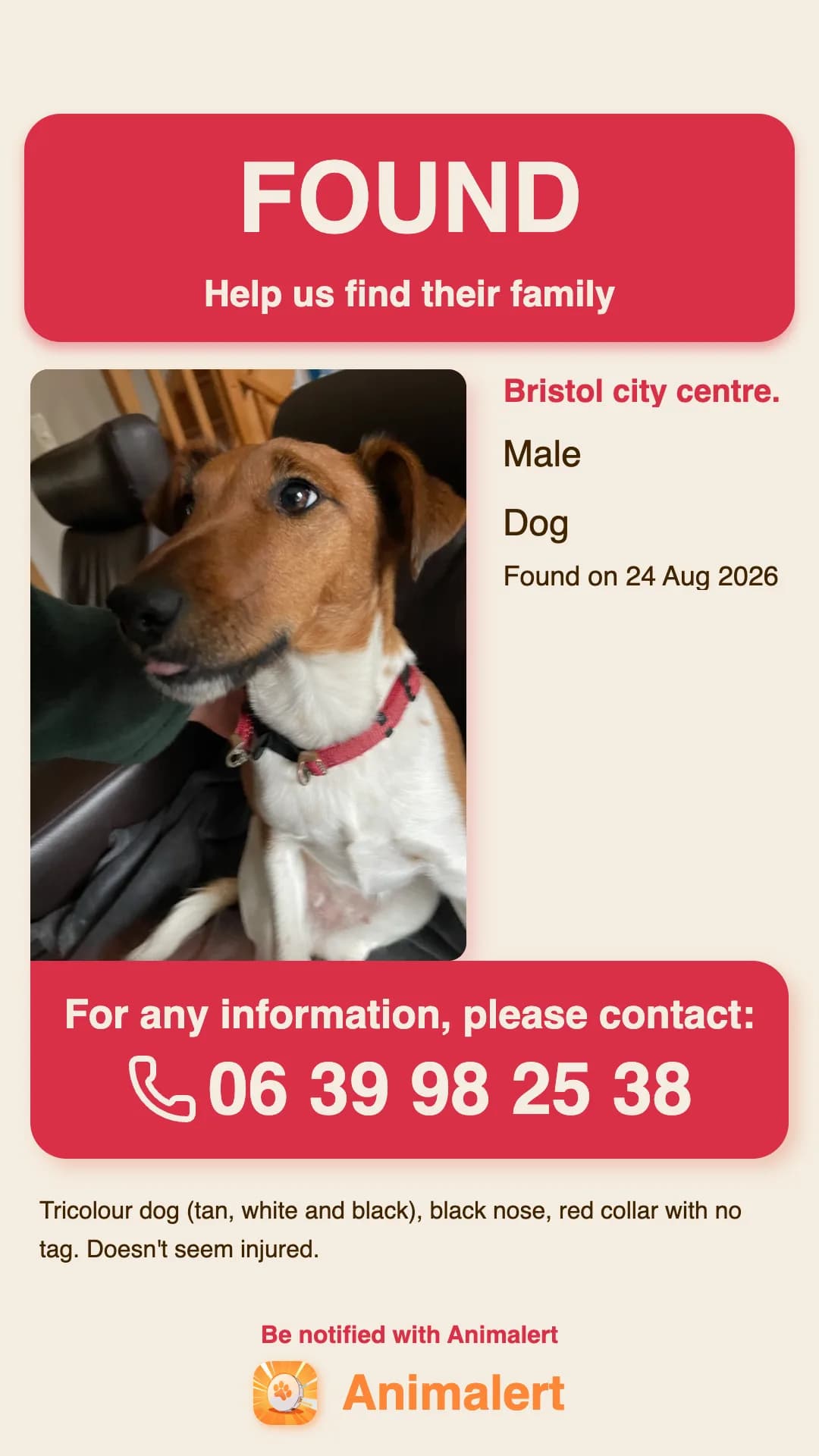
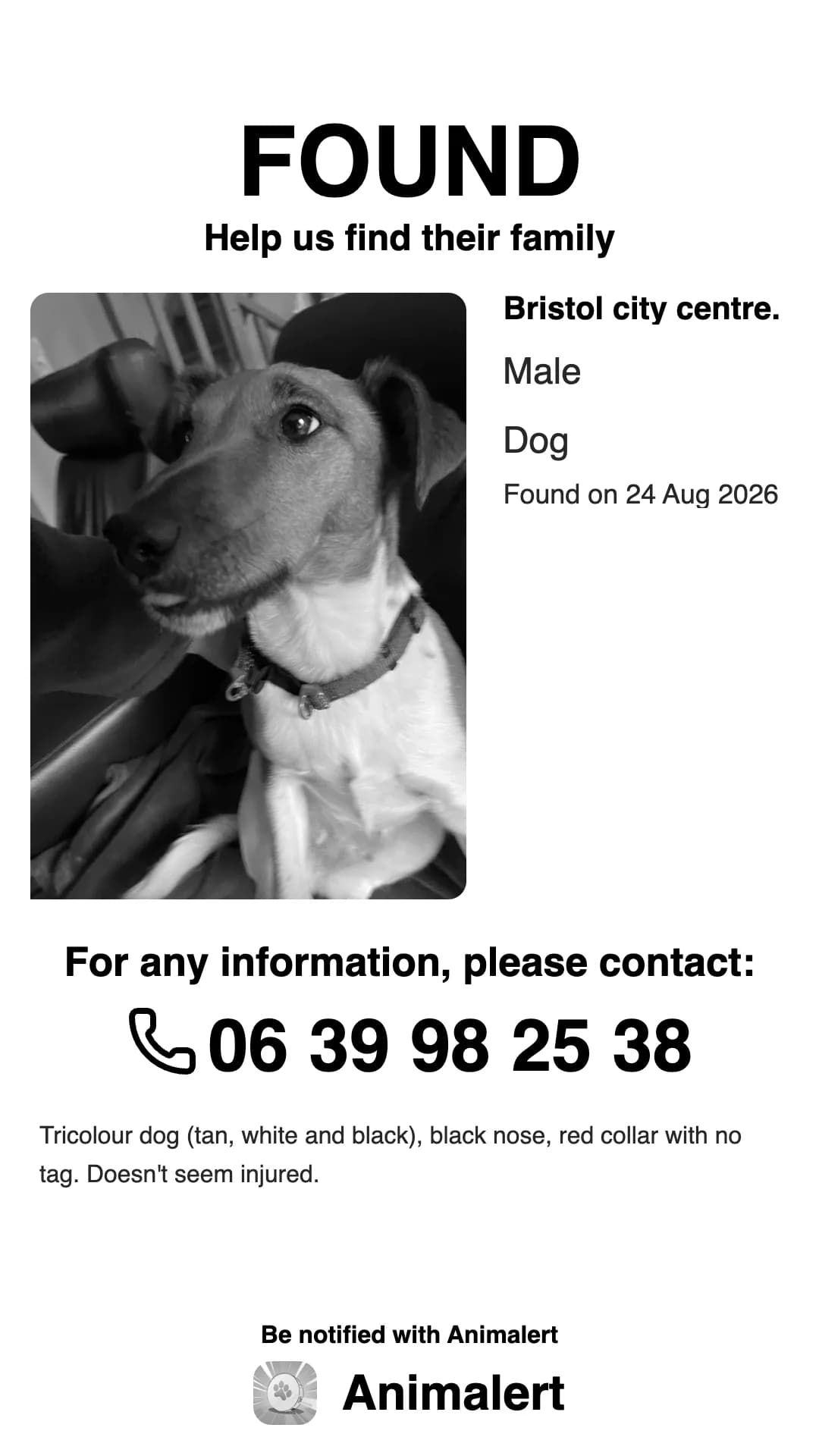
A "found" poster is not filled in like a "lost" one. Here it is the family who has to recognise their animal, so the visible details are what matter, not a name you do not know.
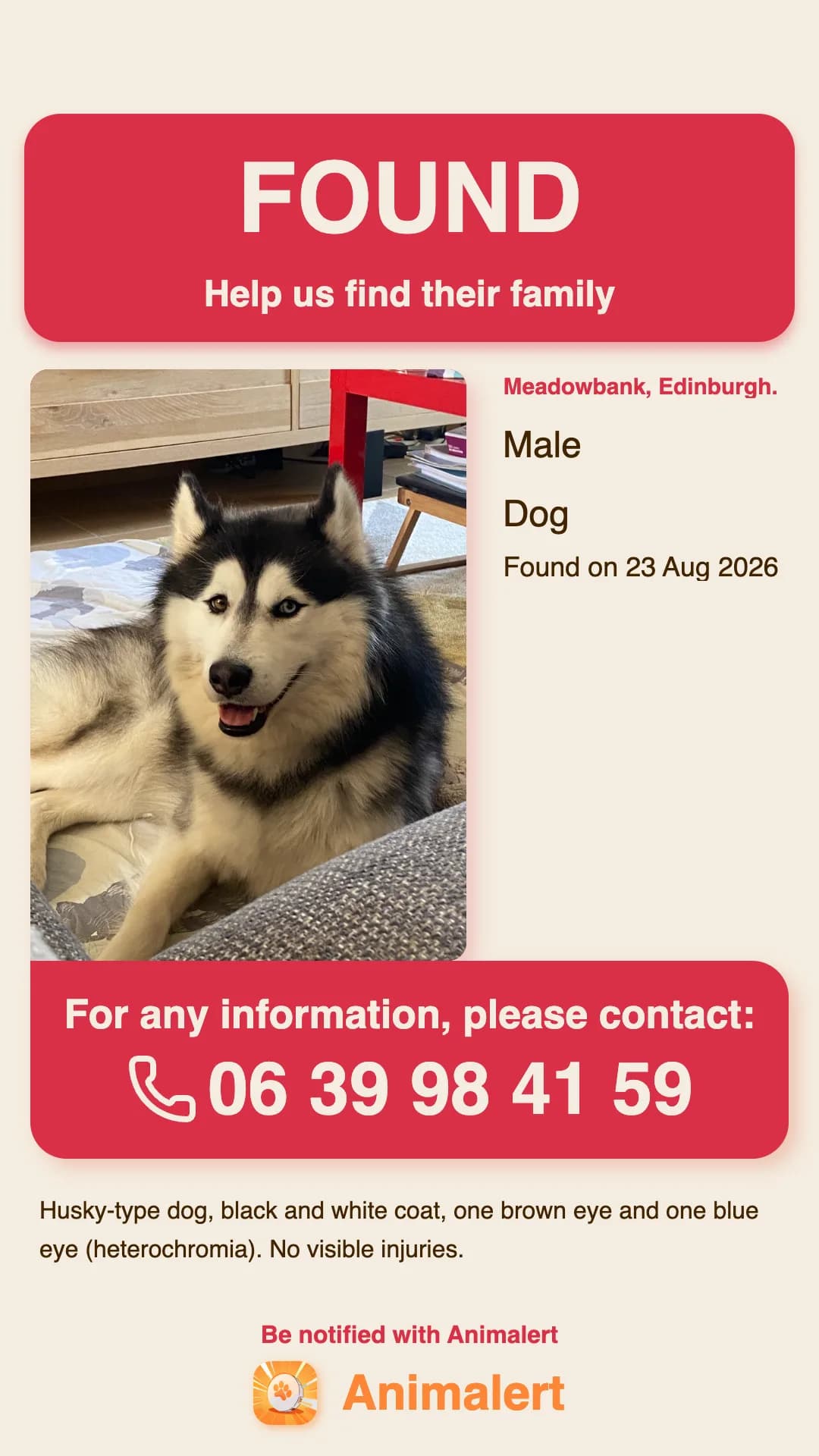
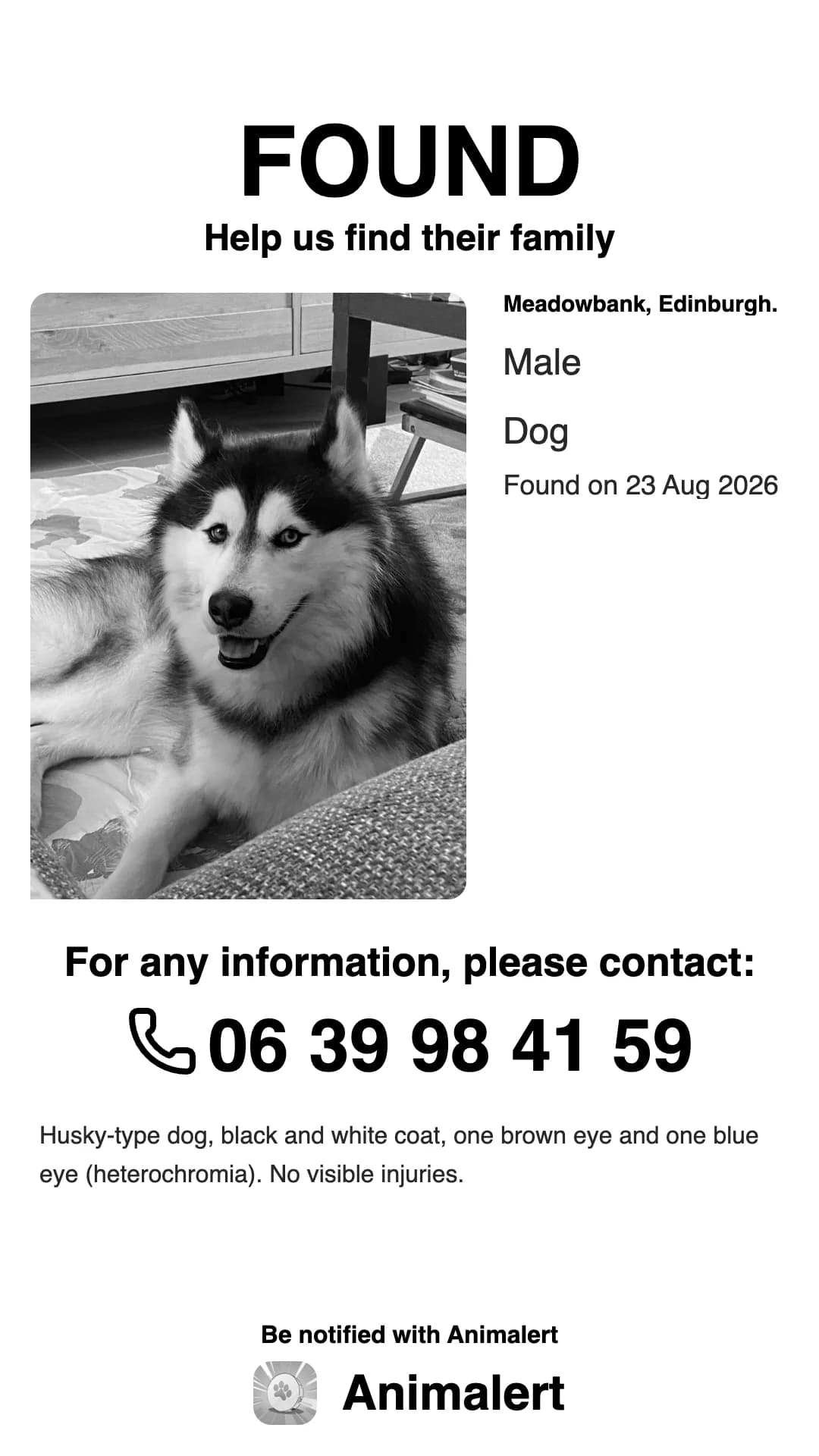
Use a sharp photo, the species, the colour and any distinctive markings, the exact place you found them and the date. A phone number with voicemail is enough as contact. Place and date are the two details that let a family connect this to their own disappearance.
Deliberately keep one detail back: a scar, something about the collar, a discreet marking. You can then ask whoever calls to describe it. It is the simplest way to be sure you are handing the animal to their actual family.
Before printing: two steps that may settle it
The poster helps, but it is not always the shortest path.
Have the microchip read. A vet, a shelter or a clinic does it free and in seconds. If the animal is registered, the family is found immediately and you have no poster to put up at all. That is the first move, before anything else.
Then check whether their disappearance is already reported on Animalert. Many families post within the first hours, with a photo, the place and the date. There is a fair chance the disappearance is already reported a few streets from where you found them.
Remember the other steps too. In France, report the animal on Animalert, where partner communes see the report, and declare it to the mairie in other communes. The national registry declaration (I-CAD) works both ways, for a loss and for a find. The poster complements those steps rather than replacing them.
Two mistakes that cost time
Do not give away every detail
A poster describing absolutely everything lets anyone recite the description over the phone. Keep one distinctive marking back and ask the caller for it. That is not misplaced suspicion, it is what protects the animal.
Do not wait to declare
There is no "let us see if someone turns up". An apparently abandoned animal is very often being actively searched for, and a declaration made the same day shortens everything that follows.
Where to put your posters, and who to tell
For a found animal the area that matters is not yours: it is where you picked them up.
Put posters up around the exact spot of the find, not around your home. Aim for places where people stop: bakeries, bus shelters, schools, park entrances, and the windows of vets and groomers. A family searching for their animal walks that perimeter, not yours.
Report the animal on Animalert first, so they show up near where you found them. By phone, then tell local vets, the pound and shelters, and the mairie if the commune is not an Animalert partner: those are who the family calls first. Online, share the story format in neighbourhood groups.
FAQ - Frequently asked questions
Am I allowed to keep an animal I found?
Not without taking steps. A found animal is not an animal without a family: they must be declared to the mairie and their chip read by a professional. The family has a legal window to reclaim them. Keeping the animal quietly exposes you, and above all leaves a family searching for nothing.
The animal has no microchip, what now?
The poster becomes your best tool, alongside the report on Animalert. Many animals are not registered, cats and rabbits especially. Put posters up around where you found them, report the animal on Animalert at that spot, and tell local vets. In a commune that is not an Animalert partner, declare it to the mairie as well.
How can I be sure I return them to the right family?
Do not put every distinctive marking on the poster. Keep one back, then ask the caller to describe it, and if you can ask for a photo of the animal at their home or a vet document. A real family provides all of that without difficulty.
Should I write the exact place I found them?
Write the street or the neighbourhood and the date, yes: that is what lets a family make the connection. You can stay vague on the precise address if you prefer, what matters is that the area and the day are accurate.
Did this tool help?
Tell us what you thought. Your feedback helps us improve the tool for the families who will be looking for their animal after you.