
Emergency guide: making your lost pet flyer work harder
How to make a lost pet poster, step by step
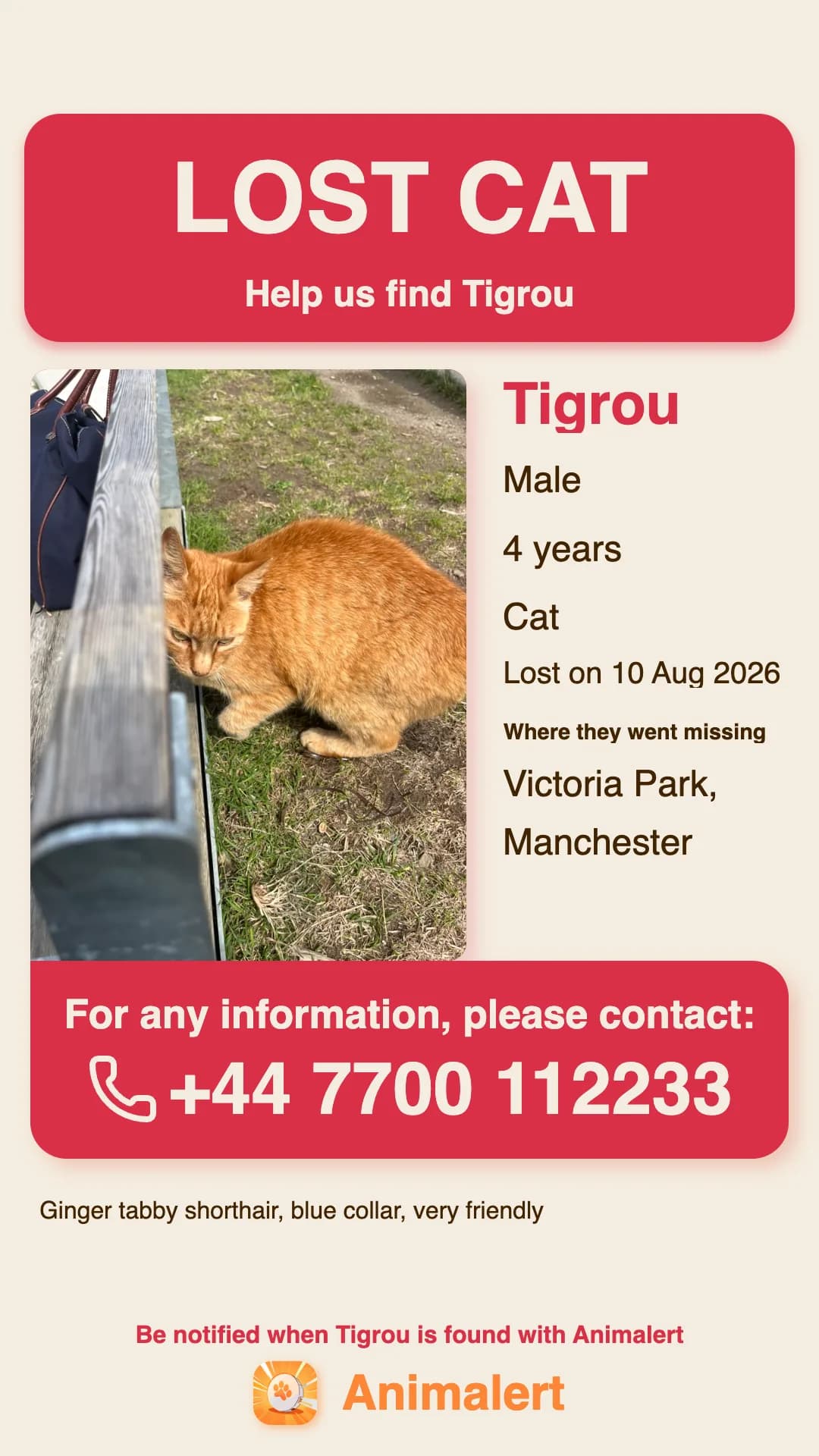
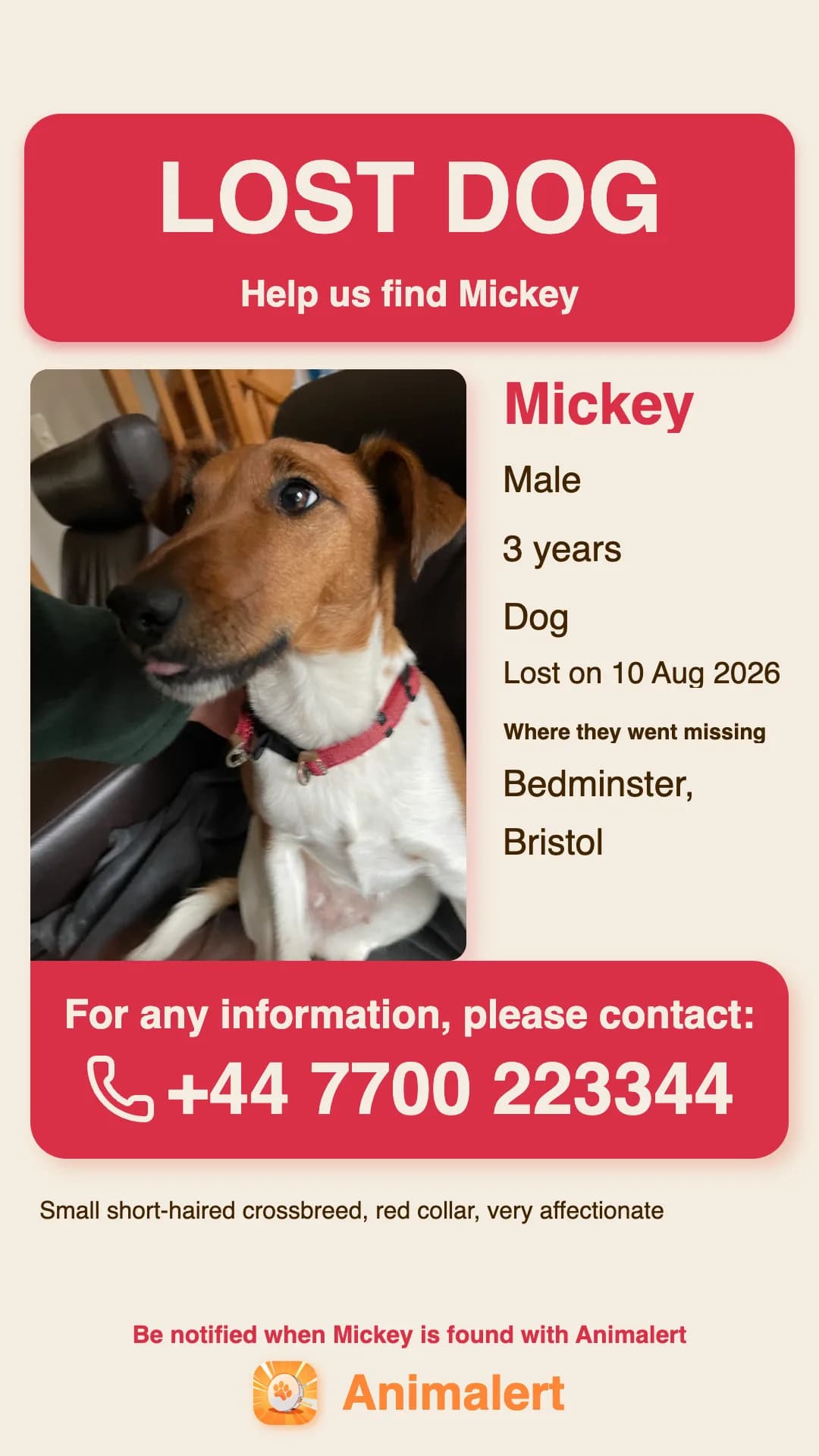
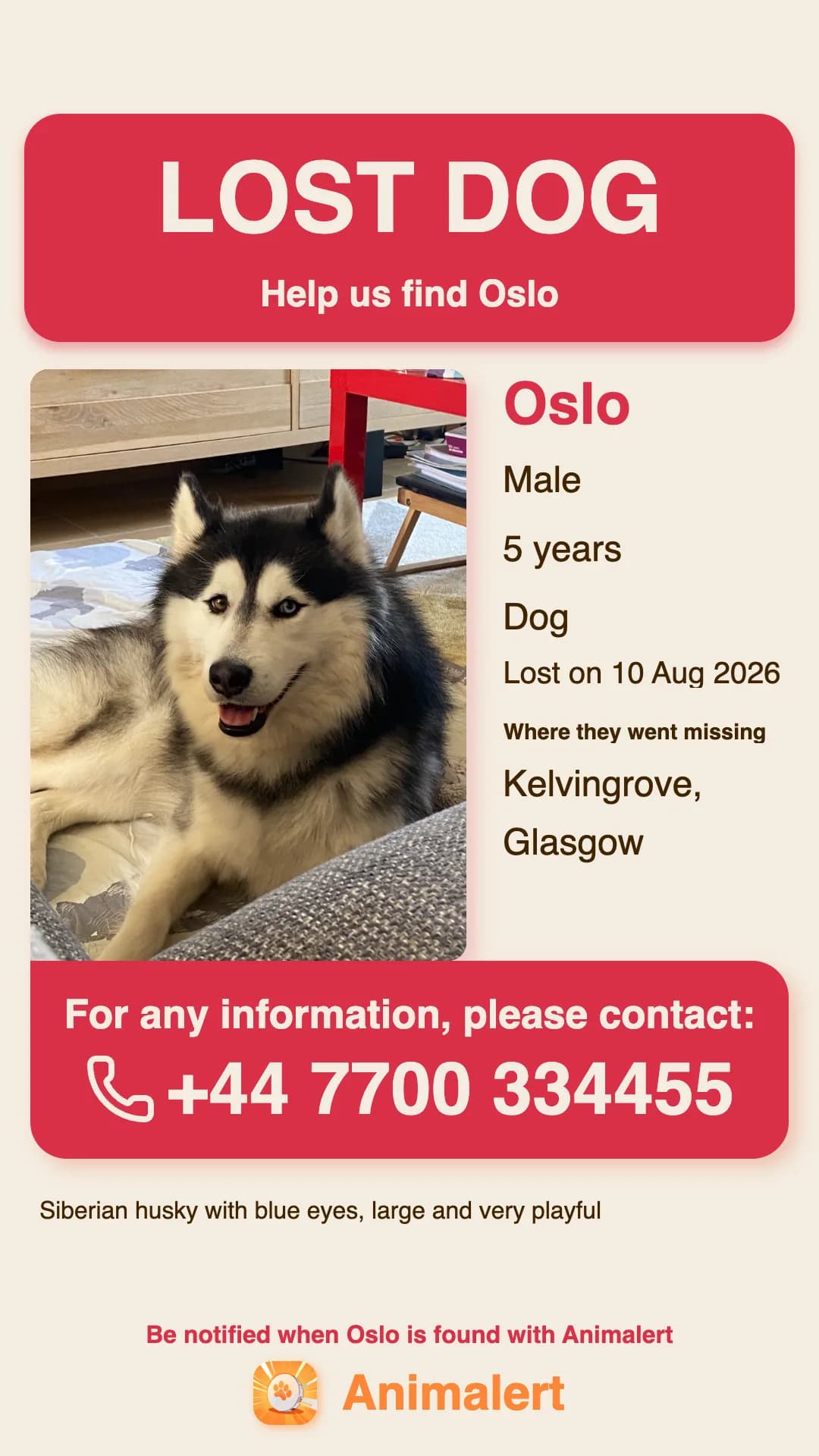
The generator handles the layout for you. Here is what happens, in order, to make a lost pet poster that reads at a glance.
Start with the photo, because that is what people remember. Pick a sharp, well-lit image where your companion is clearly recognisable, facing the camera if you can. Then add their name, species and breed: a ginger tabby and a black cat are not searched for the same way.
Fill in where and when they went missing, then a way to reach you. A phone number with voicemail is enough, and if you would rather not show yours, an Instagram handle or your report's online page does the same job. Above all, note the distinctive marks, a coloured collar, a patch, a torn ear: they are worth more than a breed name.
Then just download it. The poster comes out as a high-resolution PNG, a print-ready A4 PDF, or a story format for social media and neighbourhood groups. The same template works for a cat, a dog, a rabbit or a ferret: set the species and the layout adjusts.
1. Keys to an effective poster or flyer
In a rush, it's easy to forget the essentials. To ensure your poster catches the eye of passersby, keep these rules in mind:
- A clear photo: Choose a bright, clear photo where the animal is highly visible. Avoid dark or blurry pictures.
- Distinctive features: A colored collar, a specific spot, or a folded ear are the details that allow people to positively identify your companion.
- Safe contact: Use a phone number with voicemail, or an Instagram account if you prefer not to display your personal number.
Which format to download: PDF, PNG or Word
The format matters almost as much as the content, depending on whether you print at home, at a print shop, or share online.
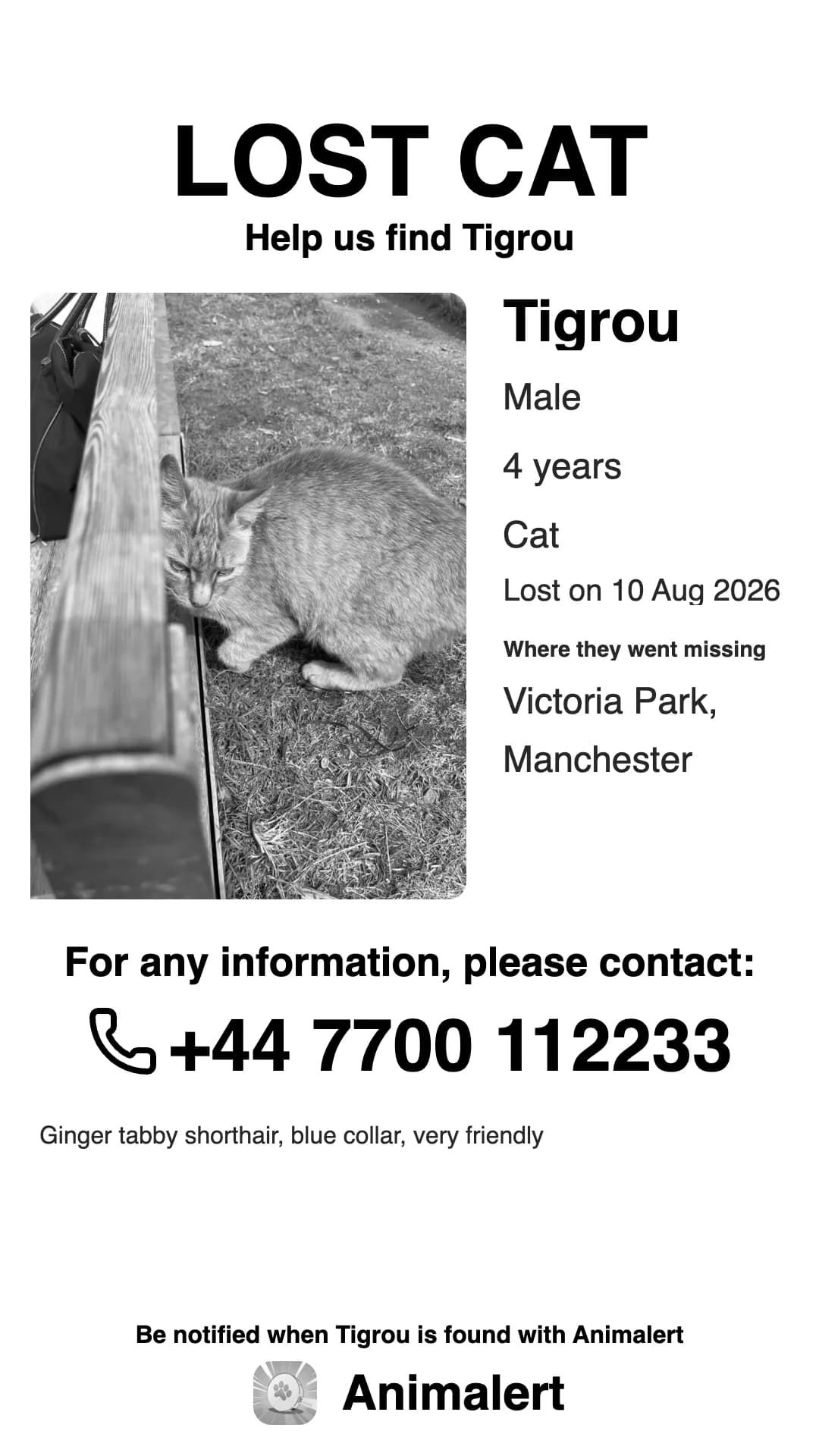
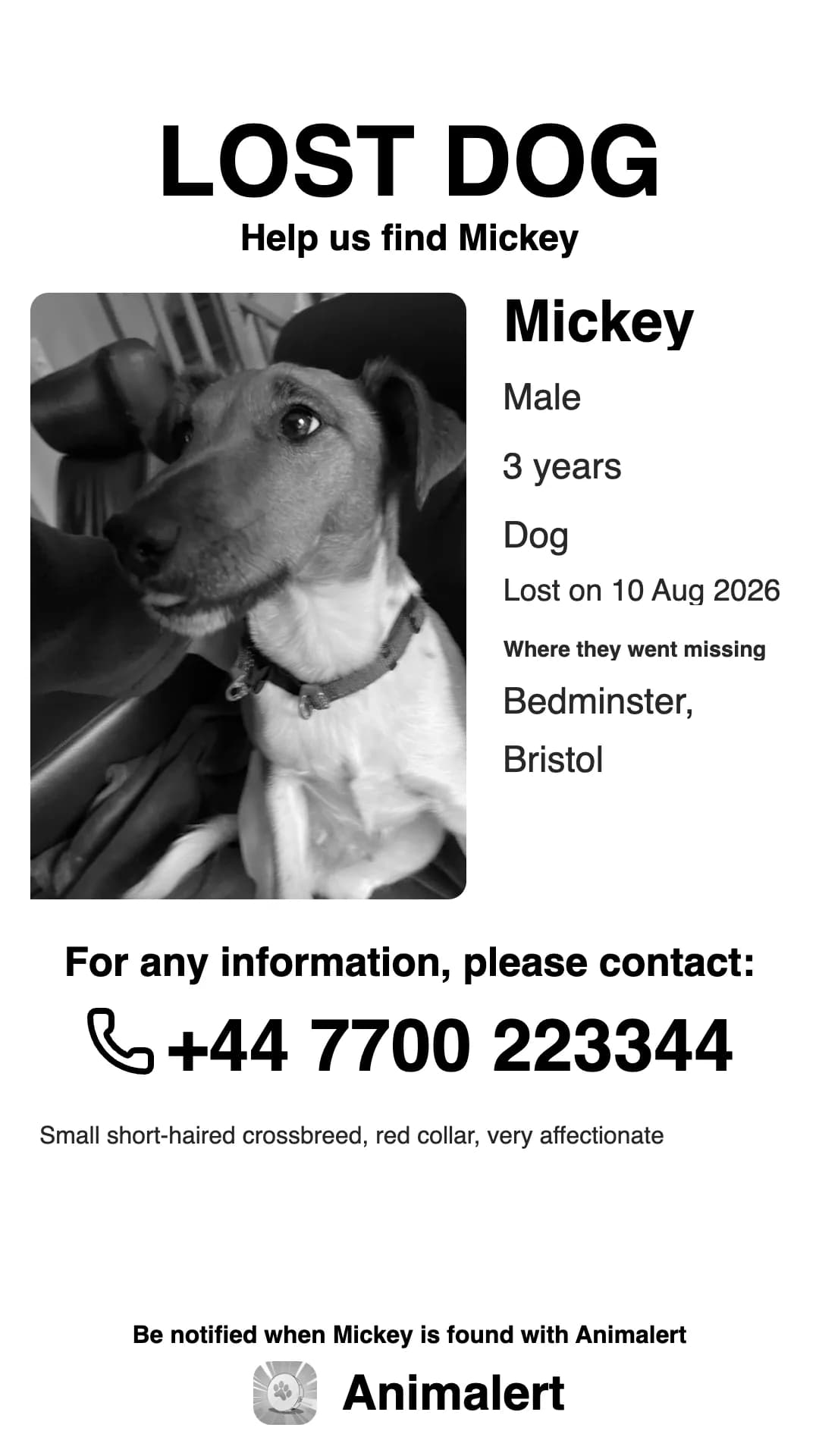
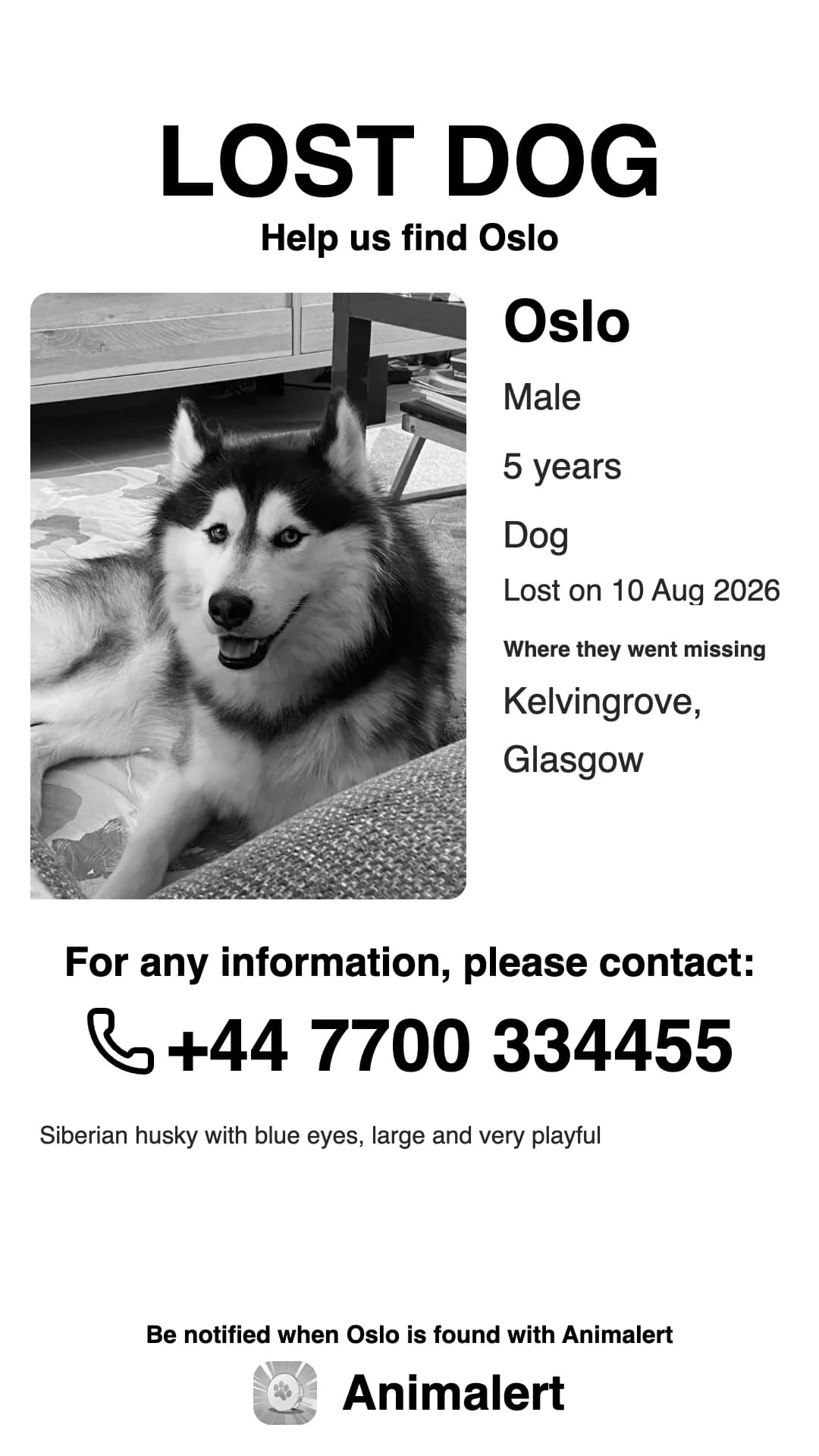
For paper, take the PDF: it comes out A4, print-ready, and the text stays sharp even scaled up. It is also the file to send to a print shop or a local business willing to print it for you. If you are printing at home, the black-and-white version uses far less ink for the same legibility.
For sharing online, take the high-resolution PNG, or the story format if you are posting on social media and in your local neighbourhood groups. It is also the file to drop into a message or an email.
And if you need to add to your poster in Word or Google Docs, just insert the PNG into the document: you keep the layout and add whatever you want around it. What the generator hands you is a finished PDF rather than a file you still have to lay out, which is what stops fonts and photo frames shifting from one computer to another. If editing the document is the part you actually want, that has a page of its own.
Word poster templateMissing pet flyer or poster: is there a difference?
The words mean the same thing and you can use whichever you prefer: a sheet that announces your animal is missing and says how to reach you.
Nothing separates them in practice. What matters is what the sheet carries: a photo readable from two metres away, the word LOST visible immediately, the animal's name, where and when they went missing, and a contact.
A word on form: an effective flyer is read in three seconds, from a pavement, sometimes in the rain. Resist the urge to write everything down. Three pieces of information in large type beat ten in small, and the rest can be said on the phone.
2. Where and how to distribute?
Fieldwork and neighbors
A frightened animal often hides during the day. Search at night when it's quiet. Put up posters strategically at red light intersections (where stopped drivers have time to look around), bus stops, and neighborhood bins. Most importantly, speak to your neighbors in person: your companion might simply be trapped in their garden or shed.
Trusted community hubs
Leave a poster with local shopkeepers (bakeries, pharmacies), absolutely notify veterinary clinics in your area, and publish their report on Animalert.
Lost dog poster or lost cat poster
Whether you are looking for a dog or a cat, a few species-specific details significantly increase your chances of being contacted:
Lost dog poster
Include the breed, collar color, and microchip status. For large breeds, mention the approximate weight: it reassures potential witnesses who might hesitate to approach.
Everything about the lost dog posterLost cat poster
Specify whether your cat is indoor-only (they rarely stray more than 200 m), their status (spayed/neutered, microchipped), and any distinctive features like a bell or an unusual coat pattern.
Where to share your flyer for the best odds
A great flyer is useless if nobody sees it. The goal is to get it circulating everywhere locals pass, on the ground and online, within the first few hours.
On the ground, aim for places where people stop and have time to read: red-light intersections and roundabouts, bus stops, mailboxes, community notice boards, and the entrances to schools and parks. Think of the people who cover the whole neighborhood every day too: your mail carrier, delivery drivers, dog walkers, and municipal staff often spot an animal before anyone else. A note dropped in a few neighboring mailboxes can be worth all the posters combined.
Online, publish their report on Animalert, which notifies people signed up near where your pet went missing, and share the story version on your social media and in your town's neighborhood and animal-help groups.
Refresh flyers damaged by rain after a few days, and always keep the same easily recognizable photo from one poster to the next: that's what people remember.
A poster isn't enough: the other helpful reflexes
Alongside your posters, a few simple steps clearly improve the chances of a reunion. Here are the ones not to forget in the first few hours.
Publish their report on Animalert, the reporting network for lost and found pets: people signed up near where your pet went missing are notified. Then report the loss wherever your pet's microchip is registered, whether that is a national database or the private registry your vet or breeder used. As soon as anyone has the chip read, the record shows as lost and you get contacted. Notify the vets and clinics around you, your local council's pound or animal warden, and nearby shelters and rescues, where a found animal is often brought within the day.
Your local council often logs sightings and holds found animals, so it is worth calling even if nobody has phoned you. Keep going back to the places where your companion was last seen. For a cat, search at dusk with your phone camera ready, and leave their bowl and something of yours by the door: familiar markers help them over the last few metres. Leave the litter tray indoors though, since despite a widespread belief it mostly draws the neighbourhood's cats rather than your own.
Finally, stay reachable and careful: log every call, be wary of demands for money in exchange for a return (a common scam), and always ask for a photo before going anywhere. As soon as your companion is home, mark them as home on Animalert and in the microchip database, and take your posters down.
Our commitment
Animalert is a community-driven tool. Unlike other platforms, we will never ask you to pay to find your pet. This tool stores no data: your poster is generated locally on your device.
Out of respect for the environment, please remember to take down your posters once your companion is found.
Going further
Before, during, after: our other free tools to help you.
FAQ - Frequently asked questions
Should I offer a reward?
No. At Animalert, bringing an animal home is an act of solidarity, not a transaction. Offering money attracts scams and malicious calls, and it undermines the neighbourly help that actually works. What truly brings pets back: a clear poster, wide sharing, and a report on Animalert that notifies people nearby.
Is the tool really 100% free?
Yes. You do not need to create an account or enter a credit card. You generate your poster and download it immediately. Our non-profit will never ask you to pay to find your pet.
Who should I notify first?
In addition to putting up posters, publish your report on Animalert to alert people signed up near where your pet went missing, report the loss straight away wherever the microchip is registered, and notify local vets, your council's pound or animal warden, and nearby shelters.
Can I add a QR code to the poster?
When you publish your report on Animalert, the poster can link to your pet's online page: passersby find it at a glance, with the photo, location, and your contact details always up to date. It's more reliable than a number that changes, and it avoids displaying your personal information in large print.
Where should I put up and share my poster?
On the ground, put your flyers up at red lights, bus stops, mailboxes, schools, and neighborhood shops, and talk to your neighbors, mail carrier, and vets. Online, publish the report on Animalert to reach locals in the area, and share the story version in your town's neighborhood and animal-help groups.
What formats can I download the poster in?
You can save a high-resolution PNG image, export a print-ready A4 PDF, or print directly. The story format suits social media. The PNG image also drops easily into a Word or Google Docs document if you prefer.
Should I report the loss to a pet registry and shelter?
Yes, it's essential. Mark your pet as lost in the database their microchip is registered with, so that the moment a vet or a shelter reads the chip, they can see it is being searched for. If you are not sure which registry holds the record, your vet can look it up from the chip number. Also notify local shelters and pounds, where found animals are often brought.
How long before an animal comes back?
There's no rule: some return on their own within the day, others are found after several weeks. A frightened cat often hides very close to home for several days before daring to come out. Don't give up: keep searching, keep posting, and keep their report on Animalert up to date over time.
Does it work for a cat, a dog, or a small pet too?
Yes. You can create a poster for a cat, a dog, a rabbit, a ferret, or any other companion animal. Just enter the species, breed, distinctive features, and where they went missing: the template adapts to each companion.
Did this tool help?
Tell us what you thought. Your feedback helps us improve the tool for the families who will be looking for their animal after you.