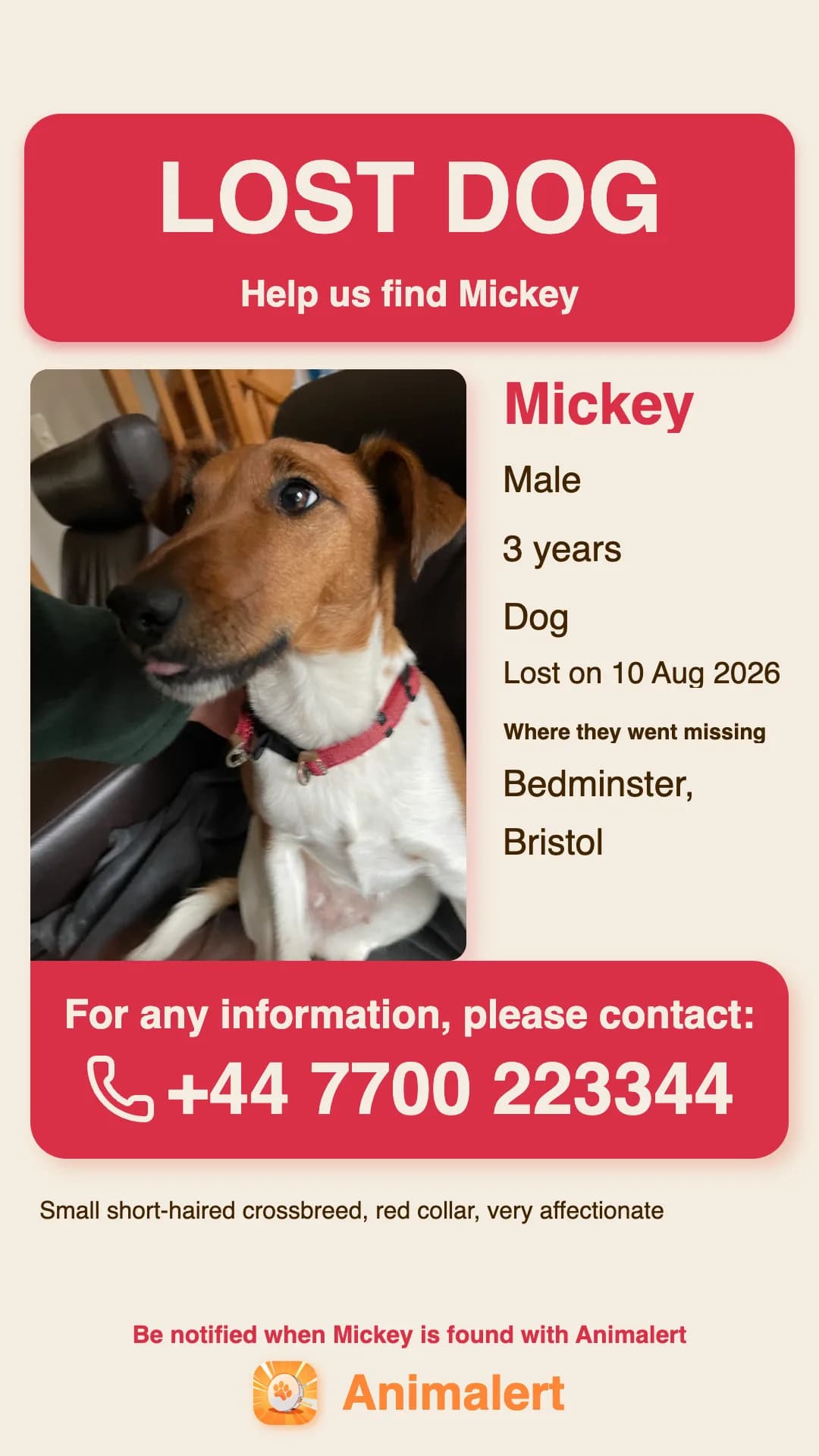
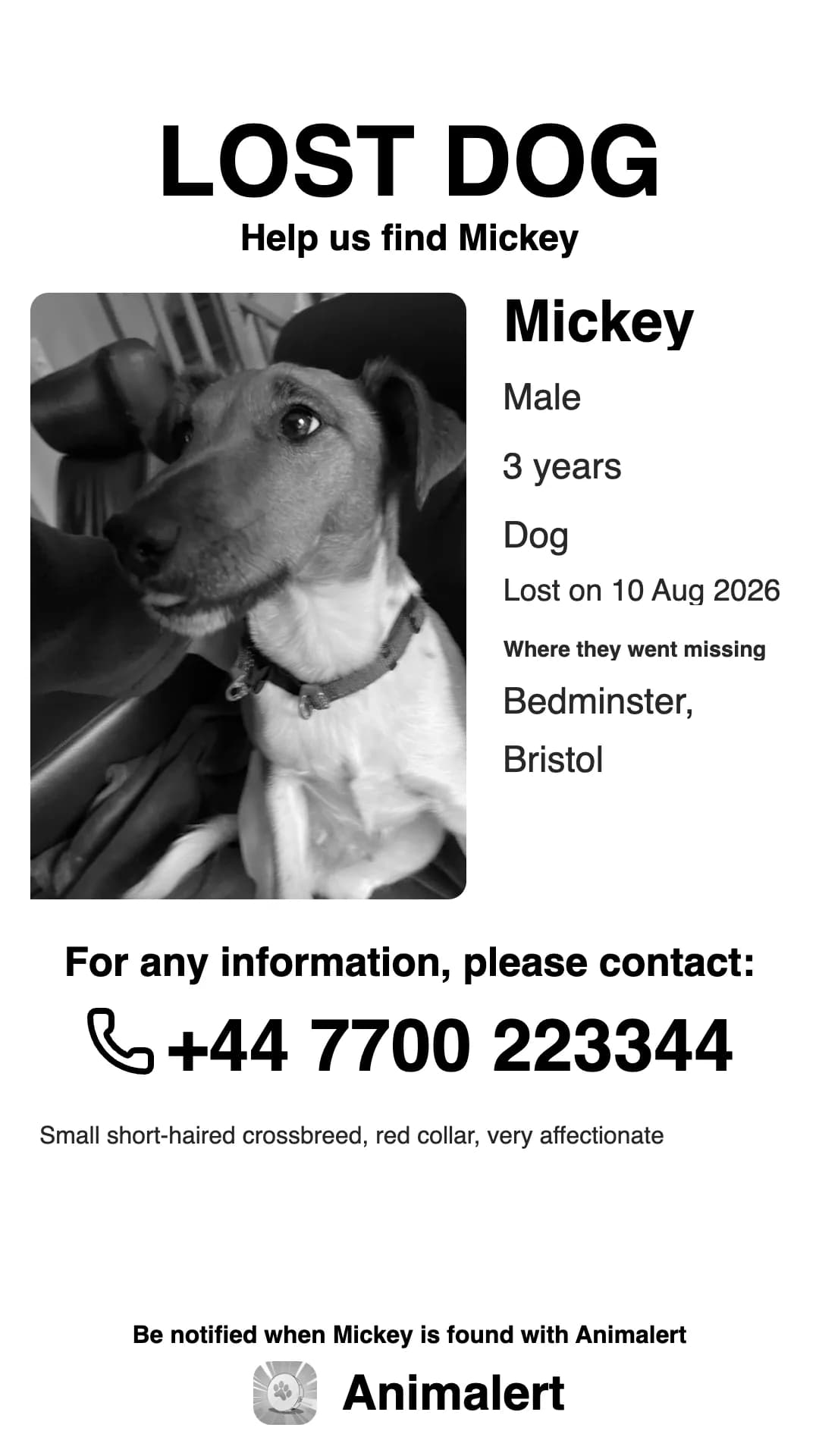
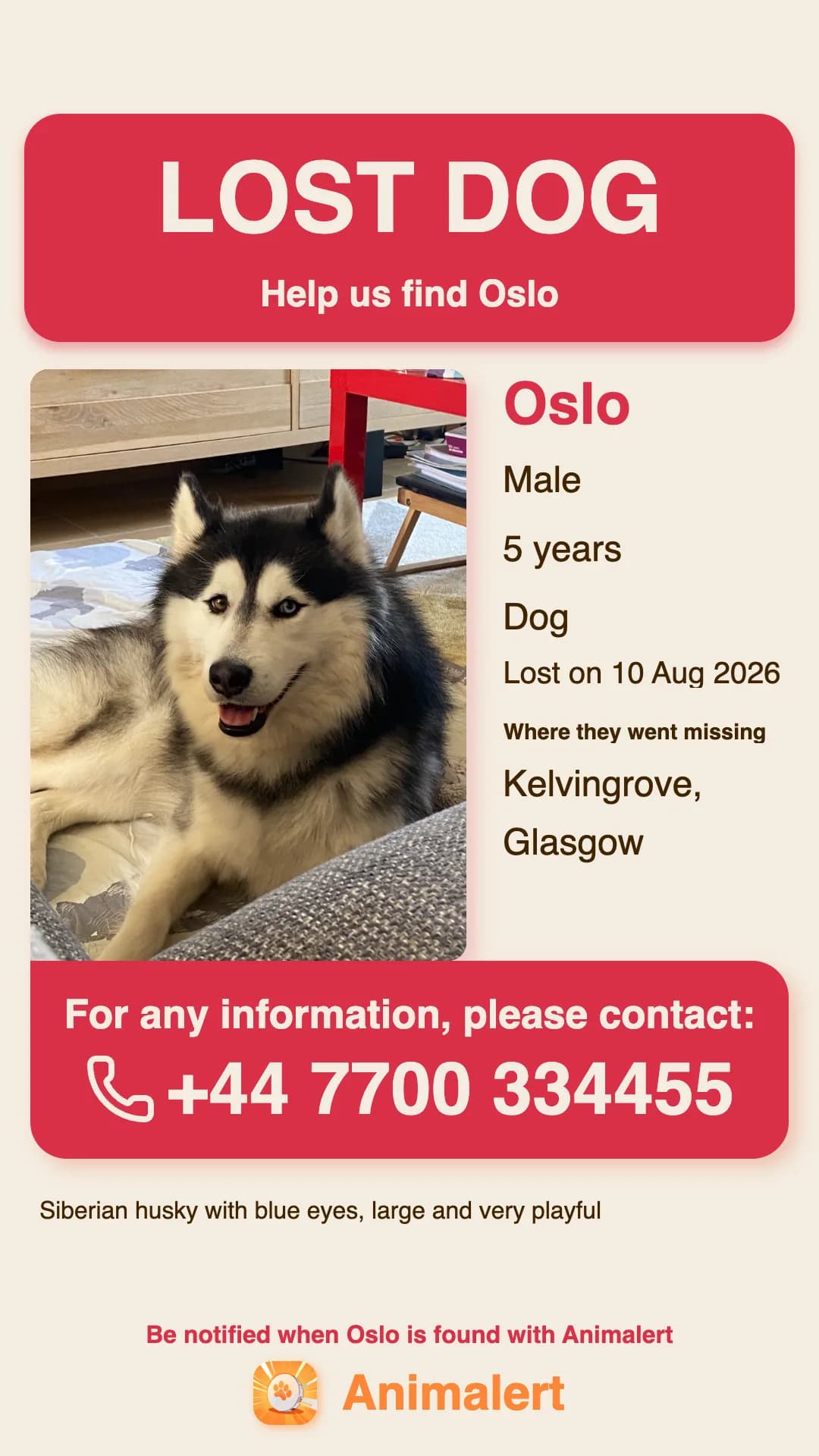
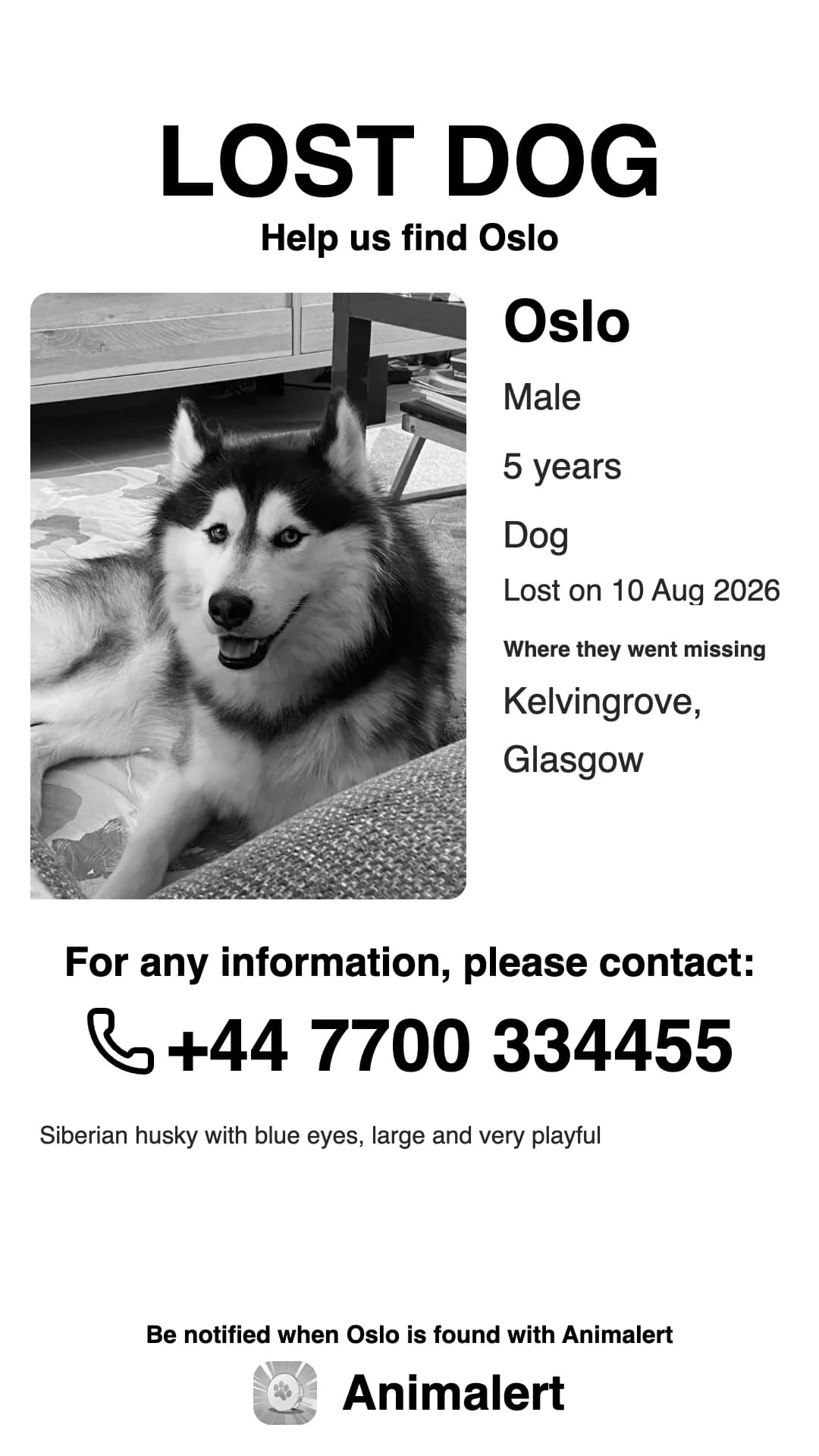

Making a lost dog poster: what belongs on it
A lost dog flyer gets three seconds to be read, from a pavement. This is what makes the difference.
A sharp photo with your dog facing the camera in good light, their approximate size ("30 kg shepherd" tells people more than a breed name), the colour of their collar if they wear one, and where and when they went missing. A phone number with voicemail is enough as a contact.
The commonly forgotten part: say whether they are microchipped or tattooed, and add one distinctive mark visible from a distance, a patch, a floppy ear, a white paw. That detail is what turns "I saw a dog" into "I saw yours".
A lost dog is not searched for like a lost cat
The difference changes how you post and where you look.
A frightened cat hides, often within two hundred metres of home, and for several days. A dog walks. It can cover several kilometres in a night, follow a road, cross into the next town. So post wide: not just your street, but the roads leading out of the neighbourhood, the parks, and neighbouring towns once it has been more than a day.
The other difference is that a loose dog may be taken in by someone or brought to the pound. Check on Animalert whether they have been reported found, then call the pound, the vets and your local council, and not only in your own area: the neighbouring ones too.
Then write the line few people think to add: "do not chase him, call me". A frightened dog runs the moment someone comes at it, and every chase pushes it further away. A witness who stands still, crouches down and phones you is far more use than one who tries to grab it.
Two details that get you called
Size, not just breed
Plenty of people cannot identify breeds, but everyone can say "small", "medium" or "large". Give a rough size and weight: it also reassures witnesses who hesitate to approach a dog they assume is imposing.
The microchip or tattoo
Say that they are identified. A vet or shelter who reads the chip sees immediately that the dog is reported missing and calls you back. Make that report to your national pet database at the same time as you put up your posters.
Where to put your flyers, and who to call
Flyers work best when they land alongside a few phone calls.
On the ground, aim for where people stop: traffic lights, roundabouts, bus stops, bakeries, schools, park entrances, and the windows of vets and groomers. Talk to the people who cover the whole neighbourhood daily too: your mail carrier, delivery drivers, dog walkers, municipal staff.
Post your report on Animalert first, so people registered near where your dog went missing are alerted automatically. By phone, then work through the pound, the vets, your local council and the shelters in your area, and widen to neighbouring towns. Online, share the story version in neighbourhood and animal-help groups.
FAQ - Frequently asked questions
Should I put my dog's breed on the poster?
Put it, but do not rely on it. Few passers-by recognise a breed, while everyone understands "large black dog, 30 kg, red collar". On a missing dog flyer, breed goes in as an addition, never instead of size and colour.
My dog is fearful, how do I say so?
Write it plainly on the poster, with the instruction that goes with it: "nervous, please do not chase him, call me". A frightened dog runs from anyone approaching and can end up much further away. A witness who crouches, avoids staring and calls you does far more to bring him home.
How far out should I post?
Further than for a cat. A dog can cover several kilometres in a night, so go beyond your street: the roads out of the neighbourhood, the parks, and neighbouring towns once it has been more than a day. Replace rain-damaged posters after a few days.
My dog is microchipped, is that enough?
A chip alerts nobody on its own: it has to be read, at a vet, a shelter or the pound. Report your dog as missing to your national pet identification database so the record shows as searched-for the first time it is scanned, post their report on Animalert for the people who cross their path before that, and keep posting.
Did this tool help?
Tell us what you thought. Your feedback helps us improve the tool for the families who will be looking for their animal after you.