
Floods, Ardèche and 7 other départements, September 2015
124 communes under a natural disaster declaration (flood)
307 protected animal species recorded in the declared communes in the ten years before the flood
44 animal species threatened on the national Red List, protected or not
birds: by their population in the flood's season

- Dates per the orders
- 12 to 17 September 2015
- Départements
- Ardèche, Hérault, Gard, Lozère, Aveyron and 3 other départements
- Flood type
- river flooding, runoff or mudflow
- Heaviest rainfall
- 385.2 mm
- in one day (Hérault, 12 September 2015), LA VACQUERIE station · per Météo-France
- 7 September 2015: 0 mm
- 8 September 2015: 0.2 mm
- 9 September 2015: 0 mm
- 10 September 2015: 0.2 mm
- 11 September 2015: 4.2 mm
- 12 September 2015: 385.2 mm
- 13 September 2015: 0.4 mm
- 14 September 2015: 0.2 mm
- 15 September 2015: 1.6 mm
389.6 mm from 10 to 12 Sep, up to the wettest day
The flood's dates
- Peak discharge
- 2,730 m³/s
- Le Rhône à Viviers, on 17 September 2015 · provisional Hub'Eau value, it can be revised
- Extent
- communes under a natural disaster declaration (flood)
Protected species recorded in the declared communes
Observations recorded in the ten years before the flood, some known only to within a few kilometres, up to 10 km, when their published position is blurred or given by grid square. They tell which species were reported there, not what became of each animal.
6,908 species recorded in the declared communes
307 protected animal species among them and 41 protected plants
44 animal species threatened on the national Red List, protected or not (vulnerable, endangered or critically endangered)
193 Birds
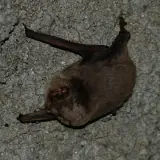
39 Mammals, bats included
23 Reptiles
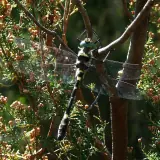
21 Insects
18 Amphibians
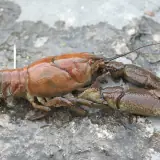
13 Fish, molluscs and crayfish
For birds, the category is the one of their population at the flood's season (breeding, wintering or passage birds): a bird with no dated record in the declared communes in that season in the GBIF data has none, and the breeding category needs at least two dated records in June or July. In the migration season (March, August to October), a bird that neither the passage list nor the wintering list assesses takes its breeding category only if it was recorded at least twice in the declared communes in June or July. The list used is named under each species.
The most notable protected animal species
Species with at least three observations (for a bird, three in the months that give it its category, and no bird without a record at the flood's season), the most threatened first, then the most recorded. An observation is a published record: it can count one or several animals, and the same animal can be noted several times. When their published position is imprecise, blurred or given by grid square, they are said to be "in the communes or nearby".
Birds
The observations cover every season: a migrant bird recorded there may have been away on the day of the flood.
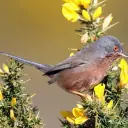
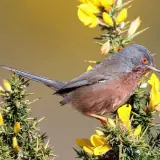 Endangered, breeding birdsDartford Warbler
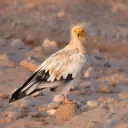
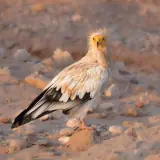 Endangered, breeding birdsEgyptian Vulture
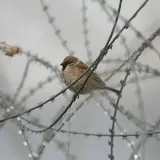 Endangered, breeding birdsEurasian Tree Sparrow
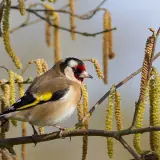 Vulnerable, breeding birdsEurasian Goldfinch
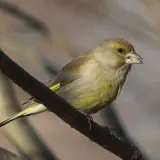 Vulnerable, breeding birdsEuropean Greenfinch
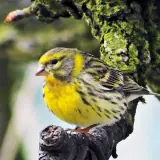 Vulnerable, breeding birdsEuropean Serin
 Vulnerable, breeding birdsCommon Kingfisher
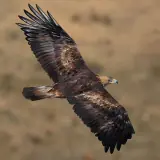 Vulnerable, breeding birdsGolden Eagle
Fish, molluscs and crayfish
For fish, national protection (order of 8 December 1988) covers their eggs and spawning grounds: several are fished legally.

Mammals, bats included
Insects
Photos: Wikimedia Commons, each under its own licence (CC BY, CC BY-SA, CC0, public domain). Credit for each photo
In the water's path
Establishments registered today in the communes declared for this flood, taken whole, at their declared address or at the point Géorisques gives. They were not necessarily there on the day of the flood, and the dataset does not say whether they were flooded. An ICPE-classified farm can also be in the SIRENE register: these counts do not add up.
No ICPE-classified livestock farm located in the declared communes
Géorisques · ICPE647 livestock businesses in the SIRENE register based in the declared communes
SIRENE register · Insee58 veterinary practices based in the declared communes
SIRENE register · Insee53 animal protection associations based in the declared communes
National register of associations11 wildlife associations based in the declared communes
National register of associations
Of the 647 livestock businesses in the SIRENE register: 253 cattle, sheep, goat or pig farms, 67 horse farms, 34 poultry farms and 293 farms of other animals.
A wildlife association is an association whose declared purpose in the national register of associations is the preservation of wildlife: the register does not say whether it runs an authorised care centre.
Protected areas in the declared communes
The sites the communes declared for this flood extend over, taken whole, dry sectors included. Natura 2000 and regulatory protection first, then the ZNIEFF, each by its area in these communes. These are not flooded areas: they are not given.
- Causse du LarzacNatura 2000, Habitats and Birds Directives
- Vallée du Gardon de MialetNatura 2000, Habitats Directive
- CévennesNational park core
- Les CévennesNatura 2000, Birds Directive
- Gorges de l'HéraultNatura 2000, Habitats Directive
- Hautes Garrigues du MontpelliéraisNatura 2000, Birds Directive
- Marais des Agusas, montagnes de la Serre et d'UzèguesNatura 2000, Habitats Directive
- Vallée du Gardon de Saint-JeanNatura 2000, Habitats Directive
- Gorges de la Vis et cirque de NavacellesNatura 2000, Birds Directive
- Basse Ardèche urgonienneNatura 2000, Habitats Directive
- Basse ArdècheNatura 2000, Birds Directive
- Gorges de Rieutord, Fage et CagnasseNatura 2000, Birds Directive
A marsh can be designated twice under Natura 2000, for its habitats and for its birds: when both sites carry the same name, or have the same extent and almost the same area here, they share one row. Natura 2000 areas overlap and do not add up.
The declared communes
124 communes declared a natural disaster (flood) for this flood, région by région, then département by département.
OccitanieHérault, Gard, Lozère, Aveyron
HéraultSee the 37 communes
Avène, Brignac, Brissac, Causse-de-la-Selle, Cazilhac, Ceilhes-et-Rocozels, Celles, Ceyras, Clermont-l'Hérault, Fozières, Ganges, Gorniès, Graissessac, La Vacquerie-et-Saint-Martin-de-Castries, Lauroux, Lavalette, Le Bosc, Le Puech, Les Plans, Les Rives, Lodève, Lunas-les-Châteaux, Moulès-et-Baucels, Octon, Olmet-et-Villecun, Pégairolles-de-l'Escalette, Roqueredonde, Saint-Étienne-de-Gourgas, Saint-Félix-de-l'Héras, Saint-Jean-de-la-Blaquière, Saint-Maurice-Navacelles, Saint-Pierre-de-la-Fage, Saint-Privat, Sorbs, Soubès, Soumont, Usclas-du-Bosc
GardSee the 30 communes
Alès, Bagnols-sur-Cèze, Barjac, Bessèges, Cendras, Courry, Gagnières, La Grand-Combe, Laval-Pradel, Le Martinet, Les Mages, Les Salles-du-Gardon, Meyrannes, Molières-sur-Cèze, Robiac-Rochessadoule, Rogues, Rousson, Saint-Ambroix, Saint-André-de-Valborgne, Saint-Brès, Saint-Florent-sur-Auzonnet, Saint-Jean-de-Valériscle, Saint-Julien-de-la-Nef, Saint-Julien-les-Rosiers, Saint-Martin-de-Valgalgues, Saint-Privat-des-Vieux, Salindres, Saumane, Sumène, Val-d'Aigoual
LozèreSee the 6 communes
Saint-André-de-Lancize, Saint-Étienne-Vallée-Française, Saint-Germain-de-Calberte, Saint-Martin-de-Lansuscle, Ventalon en Cévennes, Vialas
AveyronSee the 4 communes
Fayet, Fondamente, Mélagues, Montagnol
Auvergne-Rhône-AlpesArdèche, Drôme, Isère
ArdècheSee the 42 communes
Alba-la-Romaine, Annonay, Arras-sur-Rhône, Aubignas, Baix, Banne, Beaulieu, Berrias-et-Casteljau, Bessas, Chandolas, Chauzon, Creysseilles, Gras, Grospierres, Guilherand-Granges, Joyeuse, Labastide-de-Virac, Labeaume, Lagorce, Larnas, Le Teil, Les Vans, Pradons, Rochemaure, Ruoms, Saint-Alban-Auriolles, Saint-Andéol-de-Berg, Saint-André-de-Cruzières, Saint-Maurice-d'Ibie, Saint-Montan, Saint-Paul-le-Jeune, Saint-Remèze, Saint-Sauveur-de-Cruzières, Saint-Thomé, Salavas, Sampzon, Sceautres, Silhac, Vagnas, Vallon-Pont-d'Arc, Valvignères, Viviers
DrômeSee the 3 communes
Châteauneuf-du-Rhône, Montélimar, Saint-Marcel-lès-Sauzet
IsèreSee the commune
Saint-Georges-d'Espéranche
Provence-Alpes-Côte d'AzurHautes-Alpes
Hautes-AlpesSee the commune
Saint-Léger-les-Mélèzes
Download this flood's data
In every file of the dataset, this flood carries the identifier EV-20150912-20150913-34. Its dates were frozen when the identifier was created and differ here from the flood's.
Recognised and listed


A project labelled by the French StateNational Resilience Day 2026 (Journée nationale de la résilience)

Registered with GBIFDerived dataset, DOI 10.15468/dd.ta4vkx